
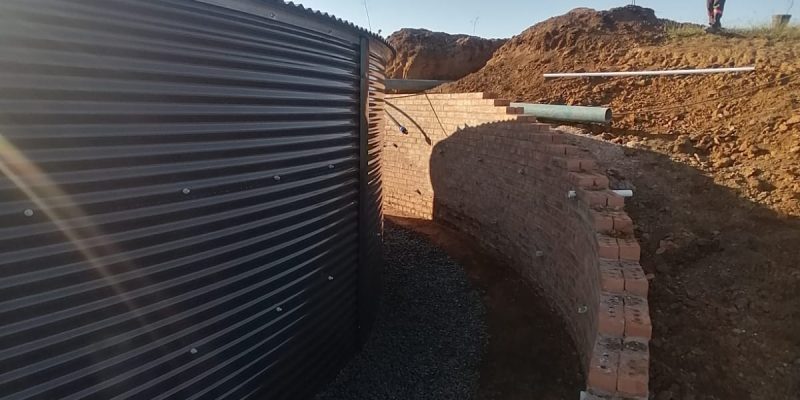
As municipal supply becomes less reliable in 2026, many South African businesses are rushing to install high-capacity tanks. However, a common mistake is ignoring the National Water Act. If you are storing significant volumes of water for commercial, industrial, or agricultural use, you may be required to register a Section 21(b) Water Use License (WULA).
What is Section 21(b)?
The South African government classifies “storing water” as a specific water use that requires authorization. This isn’t just about where you get the water, but how much of it you keep on-site. Failing to comply can lead to:
- Heavy Fines: Fines can reach millions of rands for non-compliance.
- Asset Seizure: Authorities have the power to “seal” or decommission unauthorized infrastructure.
- Insurance Rejection: Many insurers will not pay out for site damages if the water infrastructure was not legally permitted.
How Modular Steel Tanks Simplify Compliance
When applying for a WULA, the DWS looks for “engineered permanence” and “safety.”
- Professional Engineering: Unlike makeshift solutions, our Aluzinc-coated steel tanks come with technical drawings and structural certifications. This makes the engineering portion of your license application much smoother.
- Environmental Impact: Because our tanks are modular and “bolt-together,” they have a much smaller construction footprint than concrete reservoirs, often helping you bypass more rigorous environmental impact assessments (EIAs).
- Accurate Metering: Our systems are designed to integrate easily with the digital flow meters required by the 2026 DWS “Smart Monitoring” regulations.
The 90-Day Rule
In 2026, the government has committed to a 90-day turnaround for water licenses. There has never been a better time to move from “emergency backup” to a fully legal, compliant water asset.