
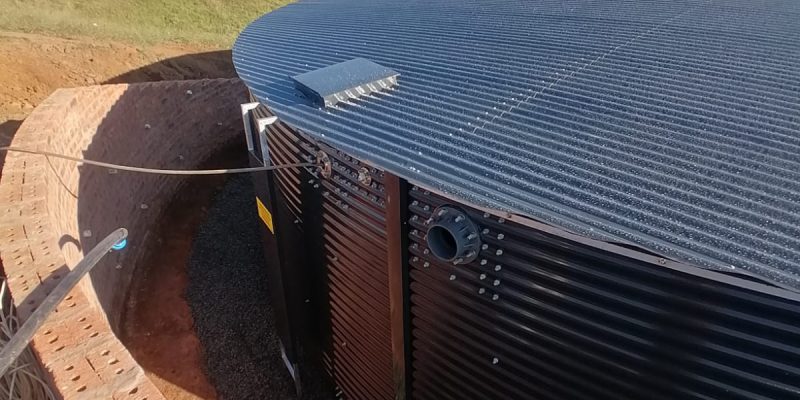
The Importance of Matching Tank Size to Borehole Yield
In South Africa, a borehole is a lifeline for any farm. However, many farmers make the mistake of pumping directly from the ground to their crops or livestock. This puts immense strain on the borehole pump and can lead to a “dry” borehole during peak demand.
To avoid this, you need a buffer. Choosing the correct borehole water storage tank size ensures that you have a constant supply of water, even if your borehole has a low recovery rate. By storing water during low-demand periods (like overnight), you protect your equipment and your livelihood.
Step 1: Understand Your Borehole Yield
Before you can select a tank, you must know your “sustainable yield.” This is the amount of water your borehole can reliably produce over 24 hours without running dry.
- Low-yield boreholes: Produce 500 – 2,000 litres per day.
- Medium-yield boreholes: Produce 2,000 – 10,000 litres per day.
- High-yield boreholes: Produce 10,000+ litres per day.
If you have a low-yield borehole, you actually need a larger tank. This allows the pump to trickle water into storage slowly over 24 hours so that you have a massive volume ready when you need to irrigate or water your herd.
Step 2: Calculate Your Daily Consumption
Your borehole water storage tank size should be based on your daily needs plus a safety margin. In South Africa, it is wise to have at least 3 days of backup storage to account for power outages or pump maintenance.
Average Farm Water Needs:
- Livestock (Beef Cattle): 50 litres per head, per day.
- Livestock (Sheep): 5–10 litres per head, per day.
- Irrigation: Roughly 5,000 to 10,000 litres per hectare depending on the crop.
- Domestic Use: 250 litres per person, per day.
Step 3: Why Aluzinc Steel is Ideal for Borehole Buffers
When storing large volumes—such as 50,000 litres or more—modular Aluzinc steel tanks offer significant advantages over plastic.
- Hoop Strength: Steel tanks handle the weight of large water volumes without “bowing” or losing shape.
- Liner Protection: Borehole water can sometimes contain sediment or minerals. The 700gsm PVC liners in Oasis tanks are easy to clean and prevent these minerals from corroding the tank structure.
- Temperature Control: Aluzinc reflects heat. Keeping borehole water cool prevents the growth of harmful bacteria and algae, which is common in South Africa’s warmer provinces like Limpopo or the Free State.
Step 4: Placement and Pressure
Where you place your tank is as important as its size. If possible, install your tank on the highest point of your farm. This creates a gravity-fed system.
By using your borehole to fill a high-elevation tank, you can distribute water to your troughs or fields without needing an additional booster pump. This reduces your electricity costs and ensures water flow during load shedding.
Summary Checklist for Farmers
- Conduct a Yield Test: Know exactly what your borehole produces.
- Aim for a 3-Day Reserve: Never calculate for just “one day” of water.
- Choose Modular: For remote farm areas, “flat-pack” steel tanks are easier to transport and assemble than dozens of plastic tanks.
Get a Custom Sizing Quote
Not sure which borehole water storage tank size is right for your specific yield? At Oasis Tanks, we help South African farmers design bespoke storage solutions that last a lifetime.