
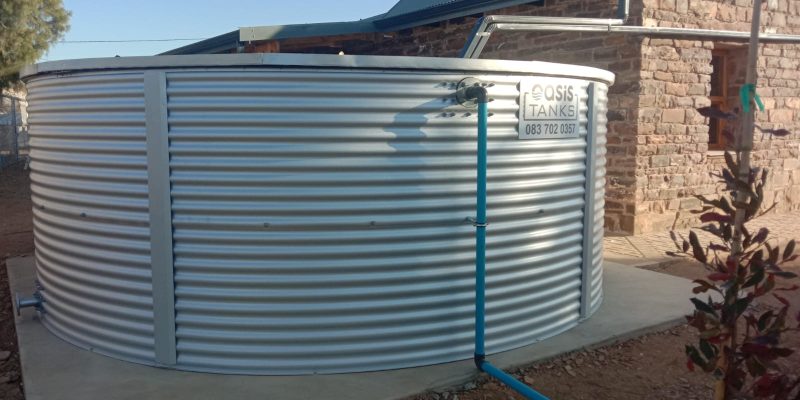
Choosing the Best Large-Scale Water Storage
In South Africa, plastic tanks have become synonymous with water tanks. For small-scale domestic use, plastic tanks are a popular and affordable choice. However, as your water requirements grow into the tens of thousands or even millions of litres, the debate between corrugated steel tanks vs plastic tanks becomes more complex.
For agricultural, industrial, or large estate needs, corrugated Aluzinc steel tanks offer specific advantages in durability, capacity, and longevity that plastic simply cannot match.
1. Superior UV Resistance and Longevity
One of the primary concerns with plastic (polyethylene) tanks is their reaction to the harsh South African sun. Even with UV stabilizers, plastic can eventually become brittle, leading to cracks or warping over time.
In contrast, Aluzinc corrugated steel tanks are entirely unaffected by UV radiation. Steel does not degrade under the sun, ensuring that the structural integrity of your tank remains intact for decades. While a high-quality plastic tank may last 15 years, an Aluzinc steel tank from Oasis is designed to last up to 40 years.
2. Capacity and Scalability
When you need to store significant volumes of water—such as 50,000 to 250,000 litres—using multiple plastic tanks can become a logistical nightmare.
- Space Efficiency: A single large steel tank has a much smaller footprint than ten 5,000-litre plastic tanks linked together.
- Cost per Litre: At a certain scale, the cost per litre of storage becomes more economical with a single modular steel unit.
- Simplified Plumbing: Linking multiple tanks requires complex manifold piping, which increases the risk of leaks at every connection point. A single steel tank requires only one inlet and one outlet.
3. Structural Strength and Fire Safety
South Africa is prone to seasonal veld fires, especially in rural and agricultural areas. In a fire situation, a plastic tank can melt or puncture easily, losing your vital water supply when you need it most.
Corrugated steel tanks are fire-resistant. They maintain their shape and hold their water even under intense heat. Additionally, the corrugated design provides immense “hoop strength,” allowing the tank to withstand the massive pressure of high-volume water storage without bulging or bursting.
4. Algae Control and Water Hygiene
Algae thrives in environments where light and heat are present. Some plastic tanks allow a small amount of light to penetrate the walls, which can encourage algae growth.
Because steel is 100% opaque, no light can enter an Oasis tank. Furthermore, the Aluzinc coating reflects heat better than dark-colored plastic. This keeps the water inside cooler and darker, which significantly reduces the chance of bacterial or algal contamination, keeping your water cleaner for longer.
5. Ease of Transport to Remote Sites
It might seem counterintuitive, but a massive steel tank is often easier to transport than a plastic one.
- The “Flat-Pack” Advantage: Oasis steel tanks are modular. They are transported in a knocked-down state (the panels are stacked).
- The Plastic Problem: To move a 10,000-litre plastic tank, you are essentially paying to transport “empty air.”
Because our tanks are assembled on-site, we can deliver a 100,000-litre storage solution to a remote farm or a tight urban construction site using a standard delivery vehicle.
The Verdict: Which Should You Choose?
If you only need to catch a few litres for your garden, a plastic tank is a great entry-level option. However, if you are looking for a long-term, high-capacity investment for your business or farm, corrugated steel tanks are the clear winner.